
A tek screw is a self-drilling fastener designed to drill its own hole and create threads as it is driven into metal or other compatible materials. Its defining feature is the drill-shaped point at the tip, which removes the need for a separate pilot-hole drilling step in many applications.
Tek screws are widely used in metal roofing, steel framing, wall panels, HVAC systems, industrial enclosures, agricultural buildings, and general metal fabrication. They can help reduce installation time, simplify assembly, and provide dependable fastening when the screw type, material thickness, coating, and installation method are correctly matched.
How Does a Tek Screw Work?
A tek screw combines two functions in one fastener:
- The drilling point cuts through the material.
- The threaded shank forms or engages threads to hold the joined materials together.
As the screw rotates, the drill point creates an opening. The threads then follow behind the point and secure the material. This allows installers to drill and fasten in one operation.
The drilling capability depends on the screw’s point design, diameter, material, hardness, driving speed, and the thickness of the substrate. A tek screw should always be selected for the actual base material rather than chosen only by its length or head style.
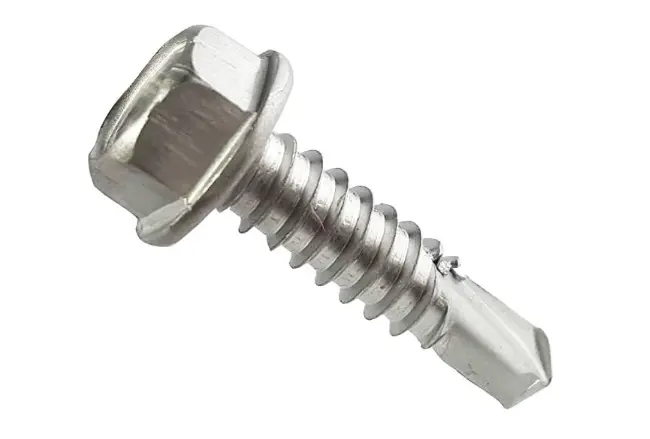
Main Parts of a Tek Screw
A typical tek screw includes several functional features.
Self-Drilling Point
The point is shaped like a small drill bit. Different drill-point designs are intended for different steel thicknesses and fastening conditions.
A larger or longer drilling point may be needed for thicker steel sections. Using a screw with an unsuitable point can lead to slow installation, overheating, stripped threads, broken fasteners, or poor holding performance.
Threaded Shank
The thread pulls materials together and creates the holding connection. Thread design can vary according to the intended substrate, such as thin sheet metal, steel framing, or a metal-to-wood assembly.
Thread engagement is important. A screw that is too short may not achieve adequate engagement, while a screw that is unnecessarily long can increase cost, create sharp protrusions, and complicate installation.
Head Style
Common head styles include:
- Hex washer head
- Hex flange head
- Pan head
- Modified truss head
- Flat or countersunk head
The right head depends on required bearing area, appearance, driving method, clearance, and whether the screw will be used with a sealing washer.
Sealing Washer
Roofing and exterior panel applications often use a bonded sealing washer. When installed correctly, the washer helps create a weather-resistant seal around the fastening point.
A sealing washer should be compressed enough to seal properly, but not so much that it is damaged or forced out of shape.
Where Are Tek Screws Used?
Tek screws are used in many commercial, industrial, and construction applications.
Metal Roofing and Wall Panels
A tek screw is commonly used to secure metal roofing sheets, wall cladding, flashing, trims, and panel accessories. Coating selection and sealing performance are important where fasteners are exposed to rain, humidity, salt air, or industrial environments.
Steel Framing
Self-drilling screws are widely used for fastening light-gauge steel framing, studs, tracks, brackets, and related construction components.
The screw must be suitable for the gauge and grade of steel. The installer should also confirm whether the connection is non-structural, load-bearing, or subject to an engineered specification.
HVAC and Ductwork
Tek screws are often used to assemble sheet-metal ductwork, fittings, supports, and enclosures. In these applications, the fastener should provide secure joining without creating unnecessary leakage paths or interfering with airflow.
Industrial Equipment and Fabrication
Manufacturers may use self-drilling screws for machine guards, cabinets, steel brackets, storage systems, electrical enclosures, agricultural equipment, and fabricated assemblies.
The correct fastener depends on vibration, access, coating requirements, maintenance needs, and whether the connection may need to be removed later.
Tek Screw vs. Self-Tapping Screw
The terms are sometimes used interchangeably, but they are not always identical.
A self-tapping screw creates or cuts threads in a pre-drilled or prepared hole. A tek screw is a type of self-tapping screw that also has a self-drilling point.
This distinction matters in production and installation planning:
| Fastener Type | Drills Its Own Hole? | Forms Threads? | Typical Use |
|---|---|---|---|
| Standard self-tapping screw | Usually no | Yes | Pre-drilled sheet or prepared materials |
| Tek screw | Yes | Yes | Metal-to-metal or metal-to-compatible-substrate fastening |
| Machine screw | No | No | Uses a pre-tapped hole or nut |
A self-drilling tek screw can save time, but it is not automatically the right choice for every assembly. Some materials, highly precise connections, thick structural sections, or special engineering applications may require pre-drilling, tapping, bolts, rivets, or other fastening methods.
How to Choose the Right Tek Screw
Selecting the correct tek screw involves more than choosing a diameter and length.
Check the Base Material
Identify what the screw will enter:
- Thin sheet metal
- Light-gauge steel framing
- Thicker steel section
- Aluminum panel
- Metal-to-wood assembly
- Composite panel system
Material thickness is especially important because it determines the drill-point capacity and thread-engagement requirement.
Choose the Correct Drill Point
Tek screws are available with different drill-point capabilities. The correct point should drill through the thickest intended metal layer without excessive delay or damage.
Do not assume a self-drilling point can handle all steel thicknesses. If the material exceeds the screw’s recommended drilling range, a pilot hole or another fastening solution may be required.
Select the Right Diameter and Length
Diameter affects holding capacity, hole size, and installation torque. Length should account for the combined thickness of the joined materials and the required thread engagement in the supporting substrate.
For roofing and panel projects, the screw should also accommodate the panel profile, washer, insulation system where applicable, and support member.
Match the Coating to the Environment
Coatings and materials help protect the fastener against corrosion. The right choice depends on the service environment, including moisture, temperature, chemicals, coastal exposure, and contact with dissimilar metals.
For long-term outdoor use, buyers should verify the coating system, corrosion-resistance expectations, compatible materials, and project-specific requirements.
Select the Correct Head and Washer
A hex washer head is popular for many roofing and metal-sheet applications because it provides strong driving engagement and a broad bearing surface. Other head styles may be preferred when appearance, clearance, or flush mounting is important.
For weather-exposed applications, use a compatible sealing washer where the fastening design requires it.
Installation Tips for Tek Screws
Correct installation affects both holding performance and appearance.
- Position the screw perpendicular to the surface.
- Use the correct driver bit or socket size.
- Begin at a controlled speed to prevent the point from wandering.
- Apply steady pressure until the drill point passes through the material.
- Reduce excessive speed once the threads begin to engage.
- Stop when the washer is properly seated or the head is securely tightened.
- Avoid overdriving, which can damage the washer, strip threads, or deform the panel.
For panel systems, follow the specified fastening pattern and spacing. Fastener location, spacing, and edge distance should not be guessed when wind load, weather resistance, or structural performance is involved.
Common Problems With Tek Screws
Stripped Threads
Threads may strip when the screw is overdriven, the material is too thin for the selected fastener, or the screw is used outside its intended range.
Failed Drilling
A screw may fail to drill effectively if the material is too thick, the point is damaged, the drill point is not suitable, or the driver speed and pressure are incorrect.
Leaks Around Roofing Fasteners
Leaks can occur when a sealing washer is missing, damaged, under-compressed, over-compressed, or installed at an angle. Correct screw placement and compatible roof-panel design are equally important.
Corrosion
Corrosion may result from an unsuitable coating, harsh environmental exposure, poor installation, or contact between incompatible metals. Always evaluate the entire assembly, not only the screw itself.
خاتمة
A tek screw is a practical self-drilling fastener that can drill, tap, and secure compatible materials in one installation step. It is widely used in roofing, cladding, framing, ductwork, and industrial fabrication because it can improve installation efficiency and create dependable connections.
The right tek screw depends on material thickness, drilling-point capacity, thread design, length, head style, sealing requirement, coating, and operating environment. For load-bearing, weather-critical, or engineered projects, confirm the fastening design against the applicable project requirements rather than relying on a generic fastener selection.
For tek screw product information, specification support, and application discussions, please contact our team.
FAQ
What is the difference between a tek screw and a normal screw?
A tek screw has a self-drilling point that can drill through compatible material while forming threads. A normal screw may require a pre-drilled hole or a pre-tapped thread.
Can a tek screw be used in wood?
Some tek screws are designed for metal-to-wood applications. However, the thread design, length, coating, and required holding strength should be checked before use.
Do tek screws need pilot holes?
Many tek screws do not require pilot holes when used within their intended drilling capacity. Thick steel, highly precise assemblies, or special materials may still require pre-drilling.
What causes a tek screw to leak on a roof?
Common causes include a damaged sealing washer, incorrect tightening, angled installation, poor fastener placement, or incompatibility with the panel system.
Can tek screws be used for structural connections?
Some applications may use specified self-drilling fasteners, but a tek screw should not be assumed suitable for structural use without confirming the engineering design, load requirements, substrate thickness, and applicable code.
Post time: 10-17-2026


