

The short answer: it depends on the screw and the material. Some self-tapping screws can be driven straight in with no pilot hole at all; others will split the workpiece, strip their threads or snap the head without one. Getting this decision right is the difference between a fast, clean installation and a damaged part.
This guide explains exactly when pre-drilling is required, when you can skip it, how to size a pilot hole correctly, and where self cutting screws and self-drilling screws fit into the picture.
The Short Answer
|
Screw type
|
Pilot hole needed?
|
|
Self-tapping screw into softwood
|
Usually not
|
|
Self-tapping screw into hardwood
|
Recommended, especially near edges
|
|
Self-tapping screw into plastic
|
Recommended — prevents cracking
|
|
Self-tapping screw into thin sheet metal
|
Often pre-punched; self-drilling type skips it
|
|
Self-tapping screw into thick steel/aluminum
|
Yes — always
|
|
Self-drilling (Tek) screw into thin metal
|
No — the tip drills as it drives
|
The general rule: the harder, thicker or more brittle the material, the more a pilot hole matters.
What "Self-Tapping" Actually Means
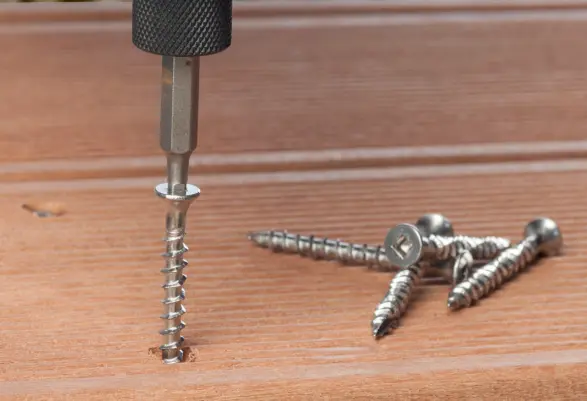
A self-tapping screw cuts or forms its own internal thread as it is driven into a material — that is what makes it "self-tapping." But there is an important nuance: most self-tapping screws do not drill their own hole. They tap threads into a hole that already exists — a pre-drilled pilot hole, a punched hole, or a hole left by the screw's own pointed tip entering soft material.
The terminology matters because buyers mix up three very different products:
- Self cutting screws (thread-cutting) — have a cutting edge or flutes that remove material and cut a thread. Used in wood, plastic and some metals.
- Thread-forming screws — displace or roll the material rather than cutting it, creating a stronger thread with no waste chips. Common in plastics and light metals.
- Self-drilling screws (Tek screws) — carry a drill-point tip that drills its own pilot hole and then taps threads in one operation. No pre-drilling in thin materials.
Every self-drilling screw is also self-tapping in the sense that it forms threads — but a self-tapping screw without a drill point cannot make its own hole in hard material.
Self-Cutting vs Thread-Forming vs Self-Drilling
|
Feature
|
Self-cutting screw
|
Thread-forming screw
|
Self-drilling screw
|
|
Creates the hole
|
No (needs pilot in hard material)
|
No (needs pilot in hard material)
|
Yes (drill-point tip)
|
|
Thread creation
|
Cuts material away
|
Displaces material
|
Cuts or forms
|
|
Best for
|
Wood, plastics, light metals
|
Plastics, light metals
|
Thin sheet metal, steel-to-steel
|
|
Pre-drill in metal
|
Usually required
|
Usually required
|
Not required in thin metal
|
When You Should Pre-Drill
Pre-drilling (making a pilot hole) is the right call in most hard or brittle materials:
- Steel, stainless and thick aluminum — self-tapping screws cannot reliably start their own hole in metal thicker than a few millimeters. Without a pilot hole you risk a broken tip, stripped threads or a stuck screw.
- Hardwood and wood near edges — hardwood can split under the wedging force of the screw. A pilot hole near the end or edge of a board is almost always recommended.
- Plastics and composites — brittle plastics crack and stress-whiten easily. A pilot hole gives the thread room to form without splitting the part.
- Thin sheet metal (when not using self-drilling) — a pre-punched or pre-drilled hole prevents distortion and lets the thread grip evenly.
Beyond preventing damage, a pilot hole also sets the screw on a straight path, reduces driving torque, and keeps the screw aligned — which is why professional assemblers pre-drill even where it is not strictly necessary.
When You Can Skip Pre-Drilling
There are three common situations where no pilot hole is needed:
- Softwood and drywall — self-tapping screws drive directly into soft pine, spruce and drywall studs without pre-drilling. The wood fibers give way and form a tight thread.
- Thin sheet metal with self-drilling screws — a Tek screw with a proper drill-point tip creates both hole and thread in one step, saving time in metal-to-metal work.
- Plastics designed for self-tapping with a proper boss — molded-in pilot holes or special low-drive-torque designs allow thread-forming screws to go in without a separate drilling step.
The rule of thumb: if the material can deform elastically around the screw and grip it, you can often skip the drill; if the material is hard, brittle or load-bearing, pre-drill.
How to Size a Pilot Hole Correctly
If you do pre-drill, the hole size is critical. A pilot hole that is too small increases driving torque — risking screw head damage, driver bit cam-out, or material fracture. A hole that is too large reduces thread engagement and pull-out strength, allowing the screw to loosen under vibration.
Practical starting points:
- Thread-forming screws: pilot hole typically 85–95% of the screw's major (outer) diameter;
- Self-cutting screws: pilot hole typically around 70–85% of the major diameter, since the cutting thread removes some material;
- Hardwoods: err toward the larger end of the range to reduce splitting risk;
- Soft plastics: err toward the smaller end so the thread has enough material to grip.
For most jobs, screw manufacturers publish pilot-hole recommendations in the datasheet — when in doubt, follow the table or test on a scrap piece first.
Common Mistakes to Avoid
- Skipping the pilot in hardwood — the most common cause of split boards and stripped threads;
- Oversizing the pilot hole — a "generous" hole quietly destroys pull-out strength;
- Using a self-tapping screw where a self-drilling screw is needed — hard steel work without a drill point ends in broken bits;
- Driving too fast — heat and torque buildup soften plastics and gall threads in metal;
- Mixing up cutting and forming types — each has its own pilot-hole sizing rule.
A Quick Reference for Common Materials
|
Material
|
Pilot hole?
|
Notes
|
|
Softwood (pine, spruce)
|
No
|
Drive directly, watch the speed
|
|
Hardwood
|
Yes
|
Especially near edges; use larger pilot
|
|
Drywall + stud
|
No
|
Into the stud directly
|
|
Plastics
|
Yes (or molded boss)
|
Prevents cracking; use forming type
|
|
Thin sheet metal (≤1 mm)
|
Self-drilling: no
|
Tek tip drills its own hole
|
|
Thin sheet metal (self-tapping)
|
Pre-punch
|
Small pilot or punched hole
|
|
Steel, thick aluminum
|
Yes
|
Required; follow datasheet sizing
|
Choosing a Reliable Fastener Supplier
The screw itself matters as much as the technique. A consistent thread, accurate point geometry and dependable surface treatment are what let a self-cutting screw do its job without pre-drilling surprises — and that consistency comes from the manufacturer.
Hebei Wuyang Fastener Manufacturing Co., Ltd., based in Yongnian District, Handan City, Hebei Province, is a fastener manufacturer founded in 2019 with a professional team of over 50 skilled workers. Its 1,000-square-meter factory integrates advanced production lines and strict quality control, producing high-precision nuts, bolts and other fasteners that meet international standards, with more than 10 production lines and 100+ fastener products. Wuyang focuses on non-standard development and research on top of existing standard components, offering OEM and ODM services — from anchor bolts and expansion anchors to custom screws — with customized solutions and on-time delivery for construction, assembly and industrial applications.
If you are sourcing self-tapping screws, self-cutting screws or custom fasteners for your project, our team can help you select the right type, size and finish. Contact Wuyang Fastener to discuss your requirements — contact us for specifications and quotations.
Conclusion
Do you need to pre-drill holes for self-tapping screws? Not always — softwood, drywall and thin sheet metal with self-drilling tips can go in without a pilot hole. But for hardwood, plastics and any metal thicker than light sheet, a correctly sized pilot hole is the difference between a strong joint and a split, stripped or broken fastener. Understand which type of screw you are using — self cutting screws, thread-forming or self-drilling — size the pilot hole to the material, and the job goes fast and holds tight.
Frequently Asked Questions
Do self-tapping screws need pilot holes?
Not always. Softwood and drywall usually accept them directly. Hardwood, plastics and metals generally need a pilot hole to prevent splitting, cracking and stripped threads — unless you use a self-drilling screw.
What is the difference between self-tapping and self-drilling screws?
A self-tapping screw taps its own thread into an existing hole; a self-drilling screw has a drill-point tip that creates the hole and the thread in one operation, so it needs no pilot hole in thin materials.
What are self cutting screws?
Self cutting screws are a type of self-tapping screw with a cutting edge or flute that removes material to cut a thread, commonly used in wood, plastics and light metals.
What size pilot hole should I drill?
As a starting point, drill about 85–95% of the screw's outer diameter for thread-forming screws and about 70–85% for self-cutting screws. Too small risks high torque and breakage; too large weakens thread grip.
Can self-cutting screws go into metal without pre-drilling?
Only in very thin metal (a punched or pre-drilled hole is still typical). For steel and thick aluminum, a pilot hole is required to avoid broken tips and stripped threads.
Post time: 09-18-2026


