

As a seasoned procurement professional, you're the gatekeeper of quality and reliability for your company. You know that success often hinges on the smallest components. While a heavy-duty bolt or anchor gets a lot of attention, what about the connectors that allow for movement and rotation? This is the world of the clevis pin. It’s a simple yet brilliant fastener designed for a very specific job: creating a secure, pivoting joint. Understanding the nuances of this component—from its size and material to the different types of clevis pins available—is crucial for ensuring the safety and functionality of machinery in construction, agriculture, and manufacturing. This guide is written for you, the decisive buyer who values precision and long-term reliability. It will demystify the clevis pin, empowering you to source the perfect component for your next critical application.
What Is a Clevis Pin and How Is It Fundamentally Different from a Bolt?
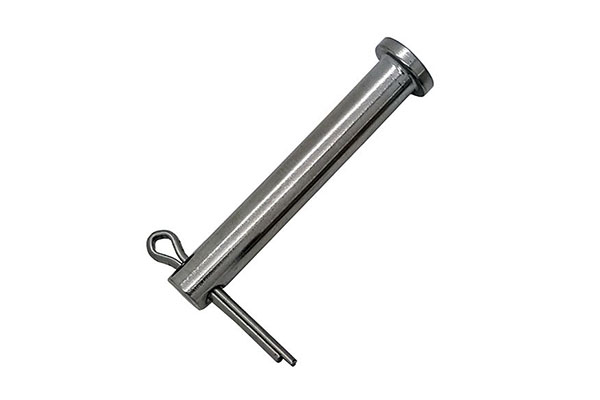
At first glance, a clevis pin might resemble a small, unthreaded bolt. Both are cylindrical fasteners used to join components. However, their functions are worlds apart. A bolt is designed with a thread to be used with a nut, creating a clamping force that holds parts together rigidly through tension. Its primary job is to resist forces trying to pull things apart. In contrast, a clevis pin is a smooth-shafted fastener designed to act as a pivot or hinge. It connects parts, like a yoke or shackle, while allowing rotational movement. The defining feature of a clevis pin is that it's secured not by a thread, but by a transverse hole at its tip that accepts a cotter pin, or by a groove that holds a clip. This design is specifically for bearing lateral stress or shearing forces.
The key difference lies in the type of load they handle. A bolt handles tensile loads (pulling), while a clevis pin is built for shear loads (sideways force). Think about the connection on a hydraulic cylinder arm. You don't want that connection to be rigid; it needs to pivot. Using a bolt would create a rigid joint that would fail under the rotational stress. This is where the clevis pin excels. It passes through the clevises (the U-shaped bracket) and the part it connects to, and a split cotter pin is then inserted through the hole in the pin's tip to keep it from backing out. This simple but effective fastening method is far more reliable for pivoting joints than standard bolts and rivets.
This functional distinction is critical when sourcing components. Specifying a bolt where a clevis pin is needed is a recipe for mechanical failure. As a manufacturer, we've seen the consequences of such mistakes. The beauty of the clevis pin is its simplicity and effectiveness in its designated role. It is a humble but indispensable piece of hardware in countless mechanical assemblies.
How Do You Properly Measure the Size and Diameter of a Clevis Pin?
Accurate measurement is the first step to sourcing the correct clevis pin. Getting the wrong size can lead to a loose, rattling connection or an inability to assemble the parts at all. There are two primary dimensions you need to measure for any clevis pin: the diameter and the effective length. The diameter is straightforward—it's the measurement of the pin's shank, or its main body. This should be measured with calipers for accuracy. The diameter must match the hole in the clevis and the component being attached to ensure a snug fit that prevents excessive play but still allows for rotation.
The second critical measurement is the effective length. This is not the overall length of the clevis pin. Instead, it's the distance from underneath the head to the center of the securing hole (or the end of the shank for headless pins). This length needs to be just long enough to pass through both sides of the clevis and the part being attached, with enough room for the cotter pin or clip to be installed without compressing the components. To measure this, you need to know the total width of the assembly where the pin's shank will sit. A simple way to measure is to sum the width of the clevis arms and the part in between.
Here’s a quick guide to measure a clevis pin:
- Diameter (D): Use calipers to measure the outside diameter of the smooth shank.
- Effective Length (L): Measure from the bearing surface under the head to the center of the cotter pin hole.
- Head Diameter: This is a less critical but still important measurement for ensuring proper seating.
Understanding how to measure a clevis pin correctly is a fundamental skill for any procurement officer. It eliminates guesswork and ensures you order the exact fastener you need for a safe and functional assembly.
What Are the Different Types of Clevis Pins Available on the Market?
While the basic function remains the same, not all clevis pins are created equal. Over time, several specialized designs have been developed to suit different applications. Understanding the different types of clevis pins will help you select the most efficient and effective solution for your project. The most common is the standard clevis pin, which has a formed head on one end and a cross-drilled hole at the other for a cotter pin. This is the workhorse for general-purpose pivoting connections.
Beyond the standard model, you'll encounter several other key types of pins. Headless clevis pins are simple cylindrical rods with a cross-drilled hole at both ends, or sometimes with a groove for retaining clips. These are used where a head would interfere with a nearby part or where the pin needs to be secured from both sides. Another popular variation is the grooved clevis pin. Instead of a hole, it features a machined groove near the end of the shank designed to accept an e-clip, retaining ring, or other type of clip. This can be faster for assembly than fumbling with a cotter pin.
Finally, there are bent clevis pins, which are often categorized with hitch pins. These have an angled or L-shaped extension instead of a head, making them very easy to grip and remove. These versatile fasteners are common in agricultural equipment and towing applications where quick connections and disconnections are necessary. Each different clevis pin design offers a specific advantage, whether it’s strength, ease of installation, or a low-profile fit.
A Closer Look at Standard Clevis Pins and Their Common Applications.
Standard clevis pins are the most recognizable type of this fastener. They are defined by a flat head or slightly domed head at one end and a cross-drilled hole at the other. This simple design is incredibly effective and has been used for centuries in a wide range of mechanical systems. The head provides a solid stopping surface, preventing the clevis pin from pulling through one side of the clevis, while the cotter pin inserted through the hole secures the other end.
The application for standard clevis pins is incredibly broad. In the marine industry, they are used extensively in sailboat rigging to connect shrouds and stays to the mast and deck. Their ability to handle strong shearing forces makes them ideal for this high-stress environment. In construction and agricultural machinery, you'll find them connecting hydraulic cylinders, control linkages, and tow hitches. The pins are typically made from low carbon steel and often zinc-plated for corrosion resistance, though stainless steel versions are available for more demanding environments.
The reliability of standard clevis pins comes from their simplicity. There are no complex parts to fail. As long as the cotter pin remains in place, the connection is secure. Their cylindrical shape ensures even load distribution across the bearing surfaces of the clevis and the attached component. This is why, despite the invention of more complex fasteners, the standard clevis pin remains a go-to solution for creating strong, dependable pivoting joints in countless various applications.
What Are Headless Clevis Pins and When Are They the Right Choice?
Headless clevis pins, as their name implies, lack the traditional head found on standard pins. Instead, they are straight cylindrical rods, often with chamfered ends for easier insertion. These headless pins are secured at both ends, typically with cotter pins through cross-drilled holes or with clips in grooves. This design makes them particularly useful in applications where a protruding head would be an obstruction or a snagging hazard.
Imagine a rotating assembly with very tight clearances. A standard clevis pin's head might collide with another moving part. A headless clevis pin solves this problem by offering a completely flush, low-profile connection. They are also ideal when you need to insert the pin through a series of aligned parts where access is limited, such as in blind holes or deep within a piece of machinery. By using a wire or a thin rod to guide the pin, it can be positioned and then secured from the accessible end.
These headless clevis pins offer great flexibility. Because they can be secured from either end, they are very adaptable to different mounting configurations. While they might require a bit more care during installation to ensure they are centered correctly, the clean and compact connection they provide is invaluable in modern, space-conscious mechanical design. When you need a strong pivot point without the bulk of a head, the headless clevis pin is the perfect solution.
Understanding Bent Clevis Pins: What Is a Bent Clevis?
A bent clevis pin, often simply called a bent pin, is a type of quick-release fastener characterized by its unique shape. While the main shank is straight like a standard clevis pin, the head is replaced by an extended leg that is bent at an angle, often 90 degrees. This bent "handle" serves two purposes: it acts as a stop to prevent the pin from passing completely through the hole, and it provides an easy grip for quick removal without tools. These are a form of bent clevis pins designed for convenience.
You've likely seen these used as hitch pins for trailers or farm implements. The bent clevis design allows a farmer to quickly connect or disconnect an attachment from a tractor. The pin is secured with a simple hairpin clip or bridge pin that passes through the hole at the end of the shank. This combination of a bent clevis and a clip creates a secure connection that is also incredibly easy to undo, even with gloves on.
This type of clevis pin is not typically used for high-precision or high-load rotational applications where the shank must rotate smoothly. Instead, its strength lies in its convenience for static connections that need to be frequently assembled and disassembled. The bent clevis pins are a perfect example of how a simple design modification can create a highly specialized and useful piece of hardware. When speed and ease of use are the top priorities, this is the fastening solution you need.
What Is the Purpose of the Groove on a Grooved Clevis Pin?
A grooved clevis pin is a clever variation that offers a different method to secure the clevis pin. Instead of having a hole drilled through the tip for a cotter pin, this type has one or more grooves machined around its circumference near the end of the shank. This groove is designed to be a seat for a retaining clip, such as an e-clip, a circlip, or a push-on retaining ring. This design choice offers several distinct advantages in certain manufacturing and assembly scenarios.
The primary benefit of a groove is speed of assembly. Snapping an e-clip into a groove is often much faster and easier than aligning the small hole in a pin and then threading a cotter pin through it, especially in automated or high-volume production lines. This can translate into significant time and labor savings. The clips also provide a secure, 360-degree hold that is less prone to vibrating loose compared to a cotter pin in some applications.
Furthermore, a grooved clevis pin can offer a lower profile than a cotter pin, which has legs that must be bent and can stick out. E-clips and retaining rings sit much more flush to the shank, which is beneficial in designs with tight clearances. The groove itself must be precisely machined to the correct depth and width to ensure the clip seats properly and provides the necessary retaining force. This makes the grooved clevis pin a high-precision component for modern, efficient fastening solutions.
Why Does the Society of Automotive Engineers (SAE) Standardize Clevis Pins?
When you see a part designated as "SAE," it means it conforms to the standards set by the Society of Automotive Engineers. The SAE plays a crucial role in the manufacturing world, and their work on components like clevis pins is vital for safety, reliability, and interchangeability. The reason the SAE goes to the trouble to standardize these parts is to ensure that a clevis pin from one manufacturer will fit and perform identically to one from another, as long as they both meet the same SAE specification.
SAE clevis pins have their dimensions, tolerances, and material properties strictly defined. This includes the head diameter, shank diameter, effective length, and the size and location of the cotter pin hole. This level of detail is critical in the automotive industry, where millions of vehicles are produced and need to be serviced. A mechanic needs to be confident that a replacement clevis pin for a brake linkage will fit perfectly and be strong enough for the job. Without SAE standards, manufacturers would produce a chaotic variety of sizes, making repairs a nightmare.
These standards extend beyond just the automotive world. Many other industries have adopted SAE clevis pins because the standards are so robust and well-documented. For a procurement professional, ordering an SAE-standard clevis pin removes the guesswork. You know exactly what you are getting, and you have a guarantee of quality and consistency. It’s a way to manage risk and ensure the integrity of your supply chain for these critical linked parts.

What Are the Best Materials for a Durable Clevis Pin?
The durability and performance of a clevis pin are directly tied to the material it's made from. The choice of material depends on the required strength, corrosion resistance, and cost for a given application. The most common material is carbon steel, specifically low carbon steel. This material offers good strength for most general-purpose applications and is very cost-effective. These steel pins are made and often plated with zinc to provide a protective barrier against rust and corrosion.
For applications requiring higher strength and the ability to withstand greater shearing forces, a higher grade of carbon steel or even alloy steel might be used. These pins are available with heat treatment to increase their hardness and shear strength. A stronger clevis pin might have a larger diameter or be made of a more robust material, which is critical in heavy-duty equipment where failure is not an option. At Hebei Wuyang, we produce a wide range of fasteners, and we understand the importance of material integrity, which is why we also offer high-strength DIN931 Black Grade 8.8 hex bolts for when tensile strength is key.
In environments where corrosion is a major concern, such as marine, chemical, or food processing industries, stainless-steel is the material of choice. Stainless steel (typically grades 304 or 316) offers excellent inherent resistance to rust and many chemicals, eliminating the need for plating. While a stainless-steel clevis pin is more expensive, its long service life in harsh conditions often makes it the most cost-effective choice in the long run. Choosing the right material is a balance of performance requirements and budget, and it’s a decision that directly impacts the safety and longevity of the final product. We also provide other corrosion-resistant options, like our versatile stainless steel/carbon steel spring washers.
How to Choose a Clevis Pin Supplier for B2B Manufacturing Needs?
For a B2B buyer like yourself, selecting a supplier is about more than just finding the lowest price on a part. It’s about building a reliable partnership that ensures quality, consistency, and a stable supply chain. When sourcing something as fundamental as a clevis pin, you might come across distributors like Reid Supply. Distributors can be convenient for small quantities, but for bulk orders and manufacturing needs, going directly to a manufacturer like Hebei Wuyang Fastener offers significant advantages. A distributor such as Reid Supply is a middleman; we are the source.
First, look for a manufacturer with robust quality control. Ask for material certifications and inquire about their inspection processes. Can they guarantee that every clevis pin in a batch of thousands meets the specified dimensional tolerances? Direct manufacturers control the entire production process, from raw material sourcing to final inspection, giving you greater assurance of quality. Second, consider their manufacturing capabilities. Do they offer OEM and ODM services? If you need a custom clevis pin with a specific length, groove placement, or made from a special alloy, a direct manufacturer is your best partner. Our factory has over 10 production lines ready to handle both standard and custom orders.
Finally, evaluate communication and support. A good supplier will have a knowledgeable team that can answer your technical questions and work with you to solve challenges. As a dynamic factory with a global footprint, we understand the pain points of international procurement. We focus on clear communication and reliable logistics to ensure your projects stay on schedule. Choosing the right supplier means looking beyond the catalog to find a partner invested in your success. Whether you need a standard clevis pin or a complex custom fastener, a direct relationship with the factory is the most effective path. You can also explore our other product categories, such as our range of durable expansion anchors for construction needs.
Key Takeaways to Remember
When sourcing your next batch of clevis pins, keep these essential points in mind to ensure you get the right product for the job:
- Function Over Form: A clevis pin is for pivoting and shear loads, while a bolt is for clamping and tensile loads. Never substitute one for the other.
- Measure Correctly: Always measure the diameter and the effective length (from under the head to the center of the securing hole) to ensure a proper fit.
- Know Your Types: Standard clevis pins are general-purpose, headless clevis pins are for tight spaces, bent pins are for quick release, and grooved pins are for fast assembly with clips.
- Standards Ensure Quality: Specifying an SAE standard clevis pin guarantees interchangeability and a known level of performance and reliability.
- Material Matches the Mission: Use carbon steel for general use, high-strength steel for heavy loads, and stainless steel for corrosive environments.
- Source Directly: For manufacturing and bulk purchasing, partnering directly with a manufacturer provides better quality control, customization options, and often, better value than going through a distributor.
Post time: 09-15-2025


