

Sourcing Locking Nuts from China: Manufacturer & Supplier Guide | Hebei Wuyang Fastener Co., Ltd
Sourcing Locking Nuts from China: Manufacturer & Supplier Guide
This page is built for product development teams evaluating locking nuts from a China Locking Nuts Manufacturer, Factory & Suppliers perspective. It organizes relevant products, specification checkpoints, and sourcing questions to help you build a more precise inquiry from the start.
Because the priority here is quality inspection points and documentation, the content is structured around review rather than browsing. Work through the product matches, buyer notes, and FAQs before finalizing your requirements.
Hot Selling Product


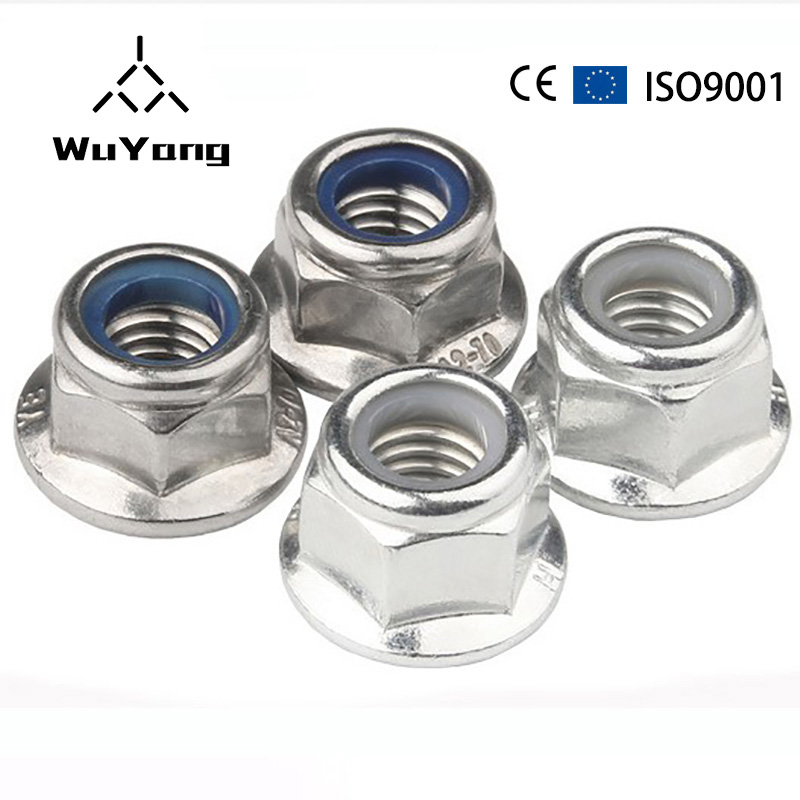
M3 M4 M5 M6 M8 M10 M12 M14 M16 DIN6926 Stainless Steel 304 Nylock Nut Flange Nylon Insert Locking Nuts
Flange anti loosening nut is a type of nut with special structure and performance. The following is a detailed introduction for you: characteristic: Flange design: There is a wider flange at the bottom of the nut, which not only increases the contact area between the nut and the connecting piece, reduces the pressure per unit area, thereby reducing damage to the surface of the connecting piece, but also helps to improve the bearing capacity and stability of the nut. Excellent anti loosening performance: Through various anti loosening mechanisms, such as adding special coatings on threads, using deformed threads, embedding elastic materials (such as nylon rings), etc., it can effectively resist loosening caused by factors such as vibration, impact, and temperature changes, ensuring the reliability and safety of the connection. High strength: usually made of high-strength materials, capable of withstanding large loads.
Read More
Closed Hook Eye Bolts, Lifting Rings, Sheep Horn Hex Keys & Wrenches
EXW PRICE : 720USD-910USD/TON
Read More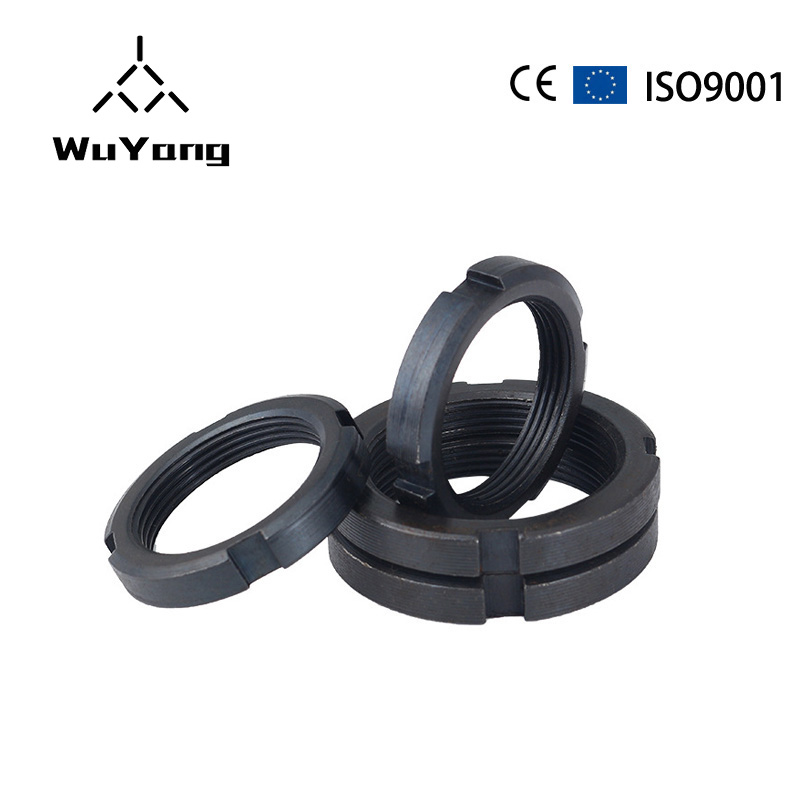
Round nutslotted locking nut
The advantages of fixing components on the shaft with round nuts: Capable of withstanding significant axial forces and easy to disassemble and assemble; Used for parts and bearings that are far away, it can avoid using long sleeves, which is beneficial for fixing the parts.
Read MoreHow To Compare locking nuts Options
Locking Nuts Product Reference
The related product list helps you compare China Locking Nuts Manufacturer, Factory & Suppliers by actual product direction rather than keyword wording alone. Check whether each product supports new product line development, then use the table below to prepare a clearer RFQ.
| Criterion | What To Check | Why It Matters | Buyer Tip |
|---|---|---|---|
| Material Certification | Request mill test reports (MTRs) for each batch | Confirms grade compliance (e.g., Grade 8, A2-70) before production commit | Ask for chemical composition and mechanical property data per ASTM/ISO standard |
| Locking Mechanism Type | Verify nylon insert, all-metal prevailing torque, or serrated flange design | Wrong locking type causes vibration failure in service | Match mechanism to operating temperature range—nylon inserts fail above ~120°C |
| Dimensional Accuracy | Request sample inspection report with thread gauge and dimensional data | Off-spec threads cause assembly rejection and line downtime | Specify GO/NO-GO gauge class and tolerance standard (DIN 985, ISO 7042) in your RFQ |
| Surface Treatment | Confirm coating type, thickness, and salt spray test hours | Inadequate coating leads to corrosion failure in field applications | For outdoor or marine use, require minimum 96-hour neutral salt spray per ISO 9227 |
| Batch Traceability | Confirm lot numbering system and documentation retention policy | Enables root-cause analysis if field issues arise post-launch | Ask supplier to include lot codes on packaging labels and shipping documents |
How To Choose locking nuts Supplier
When comparing a China Locking Nuts Manufacturer, Factory & Suppliers, the most useful evaluation points are application fit, specification scope, customization path, and how clearly the supplier communicates. A well-prepared inquiry describes the project context, target quantity, destination market, and any documentation requirements — not just a request for a catalog.
This page is organized around quality review and RFQ preparation, helping your team convert a broad sourcing keyword into specific, answerable questions for a supplier.
Begin by defining exactly how locking nuts will function in your new product line. Note which performance characteristics, dimensional tolerances, and material grades are fixed requirements versus flexible preferences. A clear application brief gives any supplier a concrete frame for recommending suitable products and flagging potential mismatches early.
Next, map out the full specification scope: thread size, material, surface finish, locking mechanism type, packaging format, and any branding or marking needs. If your project involves custom dimensions or non-standard configurations, prepare reference drawings, sample photos, or target-market notes before opening a conversation with a factory.
Before requesting a quotation, confirm your quantity range, delivery destination, required timeline, and internal approval process. For development orders that may scale into production, also ask upfront how the supplier handles first-article inspection, dimensional reports, and packaging consistency between sample and bulk shipments.
When reviewing supplier responses, weight quality inspection points and documentation as heavily as price. A supplier that asks relevant follow-up questions about your application or requests clarification on tolerances is generally easier to qualify than one that returns only a generic product list. Consistent communication at the inquiry stage is a reliable indicator of how the relationship will work during production.
| Criteria | Importance | Description | Example Options |
|---|---|---|---|
| Locking Mechanism Type | High | Determines vibration resistance and reusability suitability for the application | Nylon insert vs. all-metal prevailing torque |
| Material Grade | High | Affects load capacity, corrosion resistance, and compatibility with mating fasteners | Carbon steel grade 8 vs. A2 stainless steel |
| Surface Treatment | Medium | Impacts corrosion protection level and compliance with environmental regulations | Zinc plating vs. hot-dip galvanizing vs. plain |
| Documentation & Traceability | High | Supports engineering qualification and incoming inspection approval processes | Mill cert, dimensional report, torque test data |
| Custom Specification Capability | Medium | Indicates factory flexibility for new product line development requirements | Non-standard thread pitch or special coating request |
Top Product Matches
Recommended Products
These highlighted locking nut products reflect common starting points for development teams working through initial shortlisting. Use the specifications and product notes to narrow your focus, then move to the buying guide and FAQ sections to prepare the documentation and questions your supplier will need to give you a useful response.
Top Selling Product Selection Factors


Blog Articles / Reviews
What Is a Booker Rod? Uses, Materials, and Selection Guide
A booker rod is a fully threaded metal rod used for fastening, suspension, bracing, adjustment, and structural support. The term is commonly used in Australia and some construction markets to describe what is also called threaded rod, allthread, threaded bar, or studding. Unlike a standard bolt, a booker rod has threads along most or all of its length. This allows nuts, washers, couplers, brackets, and other fittings to be positioned...
The Heavy-Duty Champion: Why a Square Washer is Essential for Your Next Construction Project
In the world of fastening systems, the components responsible for bearing the most stress are often the most overlooked. While bolts and nuts get the credit for holding assemblies together, the simple washer plays an indispensable role in ensuring the safety, integrity, and longevity of a connection. For procurement professionals overseeing heavy-duty construction and industrial projects, the choice of washer is a critical decision. While the common round flat washer...
A Technical Guide to Hardened Alloy Steel Dowel Pins: Precision Alignment and Superior Strength
As a professional in the procurement field, you understand that the integrity of an entire piece of heavy machinery or a complex assembly can depend on its smallest component. The dowel pin, a seemingly simple cylindrical fastener, is a perfect example. Choosing the right dowel—one with the correct material, hardness, and finish—is not just a minor detail; it’s a critical decision that impacts performance, safety, and longevity. This comprehensive guide is designed to provide you with the essential technical knowledge about hardened...
Your Complete Product Guide to Standard Clevis Pins: Understanding Size, Length, and Diameter
As a procurement professional, you're the expert at finding the right components for the job. You know that a project's success often hinges on the reliability of its fasteners. While high-strength bolts and nuts get a lot of attention, other fasteners, like the clevis pin, are the unsung heroes of countless mechanical assemblies. This versatile product is essential for creating strong, pivoting connections quickly and securely. This guide is your...
The Ultimate Guide to the Solid Steel Wheelchair Axle Pin: Precision Hardware for Mobility
As a procurement professional in the industrial world, you understand that the integrity of any complex machine or structure comes down to its smallest components. A high-strength bolt, a precision nut, a hardened washer—these are the parts that bear the stress and ensure safety and performance. The same principle applies with even greater personal significance to the world of mobility equipment. The wheelchair axle pin, though seemingly simple, is a...
The Ultimate Guide to the Clevis Pin Fastener: How Clevis Pins Work and When to Use Them
As a procurement professional managing complex supply chains, you know that the reliability of your projects often hinges on the smallest components. A simple fastener can make or break a piece of heavy machinery. While a standard bolt is perfect for clamping things together, what do you do when you need a strong, secure connection that also allows for pivot and movement? This is where the clevis pin shines. This...
The buyer feedback below reflects real sourcing situations including specification checks, supplier comparisons, custom project planning, and shortlisting decisions. Review these notes alongside the product listings to identify which questions are most relevant to your own development brief.
This page helped me quickly identify which locking nut types suited our assembly line requirements before reaching out to the supplier directly.
I referenced this tag page when building my locking nuts specification checklist and it saved me from sending vague initial inquiries to China suppliers.
Browsing the locking nuts content here gave me a clearer picture of thread types and material options before I drafted my RFQ to the factory team.
The locking nuts tag page organized supplier context well enough that I could ask targeted questions about torque resistance and coating options upfront.
Frequently Asked Questions
What quality inspection points should our product development team verify when sourcing locking nuts from a China manufacturer?
Key inspection points include thread pitch accuracy, prevailing torque values, hardness testing, surface coating adhesion, and dimensional conformance to DIN or ISO standards. Request full material test reports and inspection certificates before approving samples.
What documentation does Hebei Wuyang Fastener provide to support our RFQ and new product line qualification process?
Suppliers typically provide material mill certificates, dimensional inspection reports, torque test data, and product drawings. Confirm which documents are available before submitting your RFQ to avoid delays in engineering approval.
Can locking nuts be customized for specific thread sizes, materials, or coatings required by our new product development project?
Custom options generally include thread size, pitch, material grade such as carbon or stainless steel, and surface treatment like zinc plating or hot-dip galvanizing. Provide detailed engineering drawings when requesting custom specifications.
How should our team evaluate application fit when comparing locking nut types such as nylon insert, all-metal, or flange variants?
Match locking nut type to operating temperature, vibration level, and reusability requirements. Nylon insert nuts suit moderate temperatures; all-metal versions handle high heat. Share application parameters during supplier communication to get accurate product recommendations.
What after-sales support can we expect from a China locking nuts factory if non-conformances are found during incoming inspection?
Reputable factories should offer root cause analysis, corrective action reports, and replacement or credit arrangements. Clarify non-conformance handling procedures and response timelines in your purchase agreement before placing bulk orders.
What information should our team prepare before contacting China locking nuts suppliers to streamline bulk order preparation?
Prepare target quantity, thread standard, material grade, surface finish, required documentation list, and packaging specifications. Providing complete technical requirements upfront reduces back-and-forth and accelerates accurate quotation from the factory.
Leave Your Message
Use this form to send your locking nuts inquiry to Hebei Wuyang Fastener Co., Ltd. Include your application context, quantity range, destination market, and any quality documentation requirements so the team can respond with relevant product recommendations and sourcing details.


