

How thick metal self-tapping screws can go through depends on the screw type, drill-point design, diameter, material hardness, installation method, and the manufacturer’s tested drilling capacity. There is no single thickness limit that applies to every self-tapping screw.
Standard self-tapping screws are commonly used with a pre-drilled pilot hole in metal. They form or cut mating threads as they are driven into the prepared hole. Self-drilling screws, often called TEK-style screws, include a drill-shaped point that can drill through metal and then form threads during installation.
For reliable fastening, buyers should select metal tapping screws according to the actual combined thickness of the materials, the type of steel or metal involved, and the specific screw manufacturer’s technical data.
Self-Tapping Screws vs. Self-Drilling Screws
These terms are often used interchangeably, but they describe different functions.
Standard Self-Tapping Screws
Standard self-tapping screws form or cut threads in the base material. When used in metal, they commonly require a correctly sized pilot hole. The pilot-hole diameter must be suitable for the screw diameter, thread form, sheet thickness, and material type.
A pilot hole that is too small can create excessive driving torque and increase the risk of screw breakage. A hole that is too large may reduce thread engagement and holding performance.
Self-Drilling Screws
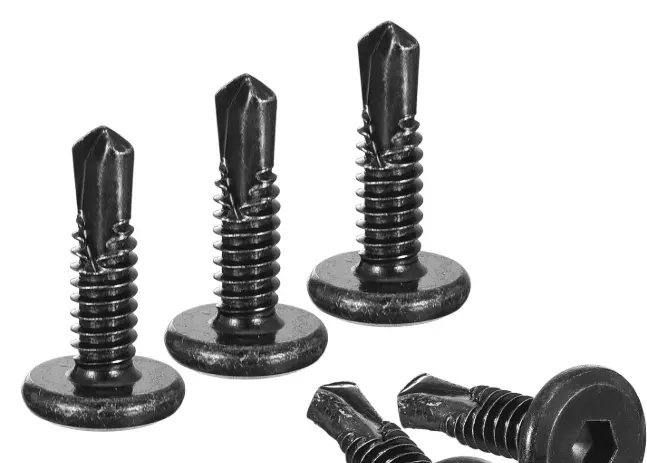
Self-drilling screws are a type of self-tapping fastener with a drill point. The point drills its own hole before the threaded portion engages the metal.
Their drilling capacity is determined by the specific drill-point design. A self-drilling screw should be selected based on the thickness it is rated to drill, not simply by its overall length or diameter.
What Determines How Thick Metal Tapping Screws Can Go Through?
Several factors affect whether a fastening screw can penetrate and secure metal effectively.
| Factor | Why It Matters |
|---|---|
| Screw type | Standard self-tapping screws normally need a pilot hole; self-drilling screws have a drilling point |
| Drill-point design | Determines the tested drilling capacity of a self-drilling screw |
| Screw diameter | Larger diameters may provide different thread engagement and torque characteristics |
| Metal thickness | Thicker metal requires an appropriate pilot hole or drill-point capacity |
| Metal grade and hardness | Hardened steel can require more drilling power than thin mild steel or aluminum |
| Combined material thickness | Multiple layers must be considered, not only the visible top sheet |
| Installation speed | Excessive speed can overheat or damage the drill point |
| Driving tool and torque | Insufficient or excessive torque can lead to incomplete fastening or failure |
| Required thread engagement | The fastener must provide suitable engagement for the connection design |
How Thick Can Standard Self-Tapping Screws Handle?
Standard self-tapping screws are primarily selected for their ability to create threads in a pre-drilled hole. Their usable metal thickness is not defined by a drill point because they are not necessarily intended to drill through solid metal sheet by themselves.
With the right pilot hole, a compatible self-tapping screw can be used in a range of sheet-metal thicknesses. However, the correct hole size must be confirmed for the specific screw type, diameter, parent material, and required holding performance.
For thicker material, engineers and installers should also review whether there is enough effective thread engagement. A connection may be possible to install but still fail to meet the required pull-out, shear, vibration, sealing, or structural performance.
How Thick Can Self-Drilling Screws Go Through?
For self-drilling screws, the correct reference is the manufacturer’s drilling-capacity rating. This rating identifies the maximum metal thickness the drill point is designed to penetrate under specified conditions.
Do not assume that a longer screw can automatically drill through thicker steel. Screw length mainly affects clamping range and engagement after installation. The drill-point geometry is what determines drilling performance.
When calculating required drilling capacity, consider all material layers that the drill point must pass through. This may include:
- Top metal panel
- Intermediate layers
- Steel support member
- Washers or connection components where relevant
- Any additional material that the drill point must penetrate
The selected screw should have a drilling capacity suitable for the complete material build-up, with allowance for the actual application conditions.
Why Metal Thickness Is Not the Only Selection Factor
A screw may be capable of penetrating a metal sheet but still be unsuitable for the final joint. Fastening performance depends on the complete connection design.
For example, thin sheet metal may be easy to drill, but it may not provide enough thread engagement for the required load. Thicker material may offer better thread engagement but require a higher-capacity drill point, controlled installation speed, and suitable driving torque.
The following questions should be answered before specifying metal tapping screws:
- What is the thickness of each layer?
- What metal grade and hardness are involved?
- Is a pilot hole allowed or required?
- Is the screw standard self-tapping or self-drilling?
- What drilling capacity does the selected drill point have?
- What clamping range is required?
- Does the joint need corrosion resistance or weather sealing?
- What pull-out, shear, vibration, or structural loads must the connection resist?
Choosing the Right Pilot Hole for Self-Tapping Screws
Pilot-hole selection is essential when using standard self-tapping screws in metal. The hole must allow the screw to form threads without creating excessive installation torque.
The correct pilot-hole size varies according to:
- Screw outside diameter
- Thread type
- Thread pitch
- Base-metal thickness
- Base-metal hardness
- Steel, aluminum, or other metal type
- Thread-forming or thread-cutting screw design
Do not use a general pilot-hole chart as a substitute for the screw supplier’s technical recommendations when a connection has important load, sealing, safety, or quality requirements.
Common Installation Problems and How to Avoid Them
Screw Will Not Penetrate the Metal
Possible causes include an incorrect screw type, inadequate drill-point capacity, hard base material, a worn drill point, or insufficient driver power. Confirm the metal thickness and select a screw designed for the application.
Drill Point Overheats or Wears Quickly
Excessive installation speed can generate heat and reduce drilling efficiency. Use a suitable driver setting and avoid forcing the screw when the point is no longer cutting effectively.
Screw Breaks During Installation
Breakage may result from excessive driving torque, an undersized pilot hole, hard metal, misalignment, or an unsuitable fastener. Stop and review the pilot-hole size, screw specification, and installation procedure.
Threads Strip or Hold Poorly
Stripped threads may be caused by an oversized pilot hole, insufficient metal thickness, overtightening, or a screw that does not match the application. Verify the required thread engagement and load performance.
Best Practices for Installing Metal Tapping Screws
For more consistent results, follow these practical steps:
- Identify the total material thickness and base-metal type.
- Determine whether a standard self-tapping screw or self-drilling screw is required.
- Confirm the screw diameter, point type, length, and material.
- Use a pilot hole when required by the selected screw.
- Keep the screw perpendicular to the work surface during installation.
- Use a suitable driver, bit, speed, and torque setting.
- Avoid overtightening after the connection is seated.
- Inspect the installed fastener for proper seating, thread engagement, and damage.
- Test the fastening method before production when the application is load-critical or structural.
Conclusion
The answer to “how thick metal can self tapping screws go through?” is determined by the specific fastener and application. Standard self-tapping screws normally require a correctly sized pilot hole, while self-drilling screws must be selected according to their published drill-point capacity.
For dependable results, evaluate the metal thickness, material hardness, total stack-up, screw type, pilot-hole requirement, required thread engagement, and installation conditions. Choosing the right metal tapping screws is the best way to support secure, efficient, and repeatable metal fastening.
For metal tapping screws and application support, please contact us: https://www.wuyangmetal.com/contact-us/
FAQ
Can self-tapping screws go through steel?
Yes, self-tapping screws can be used in steel when the screw type, pilot hole, material thickness, and installation conditions are appropriate. Self-drilling screws may drill through steel without a separate pilot hole when their drill-point capacity matches the application.
Do all metal tapping screws drill their own holes?
No. Standard self-tapping screws often require a pilot hole. Self-drilling screws have a drill point designed to drill and form threads during installation.
Does a longer self-drilling screw drill through thicker metal?
Not necessarily. Drill-point design determines drilling capacity. Screw length should be selected for the required clamping range and thread engagement after the drill point penetrates the material.
What happens if a self-tapping screw is used in metal that is too thick?
The screw may fail to penetrate, overheat, break, strip threads, or create an unreliable joint. Select a suitable fastener or use a verified pilot-hole process.
How do I choose metal tapping screws for my project?
Confirm the base-metal type, thickness of all layers, required load, screw type, diameter, point design, length, corrosion-resistance requirement, and manufacturer’s technical recommendations.
Post time: 10-29-2026


